
Key Takeaways
- The best brand content succeeds when it feels observational, emotionally relatable, and rooted in real human behavior rather than direct advertising.
- Observation-driven marketing helps brands create authentic storytelling that improves audience engagement, brand trust, and content retention.
- Human-centered marketing strategies often outperform aggressive promotional messaging because consumers connect more deeply with recognizable experiences and emotional familiarity.
- Behavioral marketing and people-focused content creation allow brands to uncover stronger customer insights, cultural patterns, and emotional triggers.
- Strong digital marketing campaigns are increasingly built around social behavior analysis, audience psychology, and culturally relevant storytelling.
- Observational content marketing improves social media engagement by making brand communication feel natural, conversational, and community-driven.
- The article highlights how modern content strategy depends on empathy, audience understanding, and authentic brand storytelling rather than traditional sales-focused messaging.
I was sitting in a café with my friends on a rainy Sunday evening for our book club meeting for the month.
Of course, it was a usual book club meeting, with giggles and discussions baked in. But this time, it was more than a book club meeting for me.
Something that I took home with me that changed the way I think about marketing and content marketing today. Who knew that observing people’s behavior could lead you to becoming the next marketing genius!
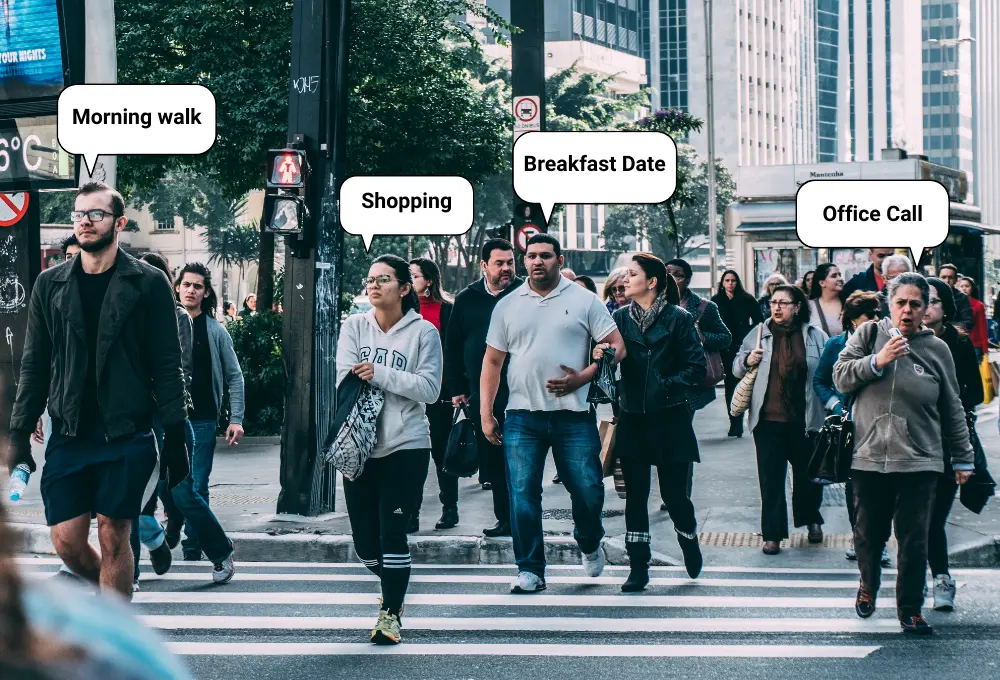
It was an epiphany that made me observe everything, from the toe tapping of that one anxious friend to that one person who looked at the clock. The relaxed regular can be felt because of the casual vibe and how they order. These were all the patterns I observed that day.
But here’s the thing: they were all doing their own thing; no shouting or selling, just doing their own thing while subtly yet strongly providing cues to those who observe, and worth more than most of the marketing questionnaires can ever do (of course, they are important, but observation goes beyond the static).
This realization just came out of nowhere, and these cues were a gift because I started to research this all even more, which is what this article is a result of.
People-Watching vs. Buyer Personas
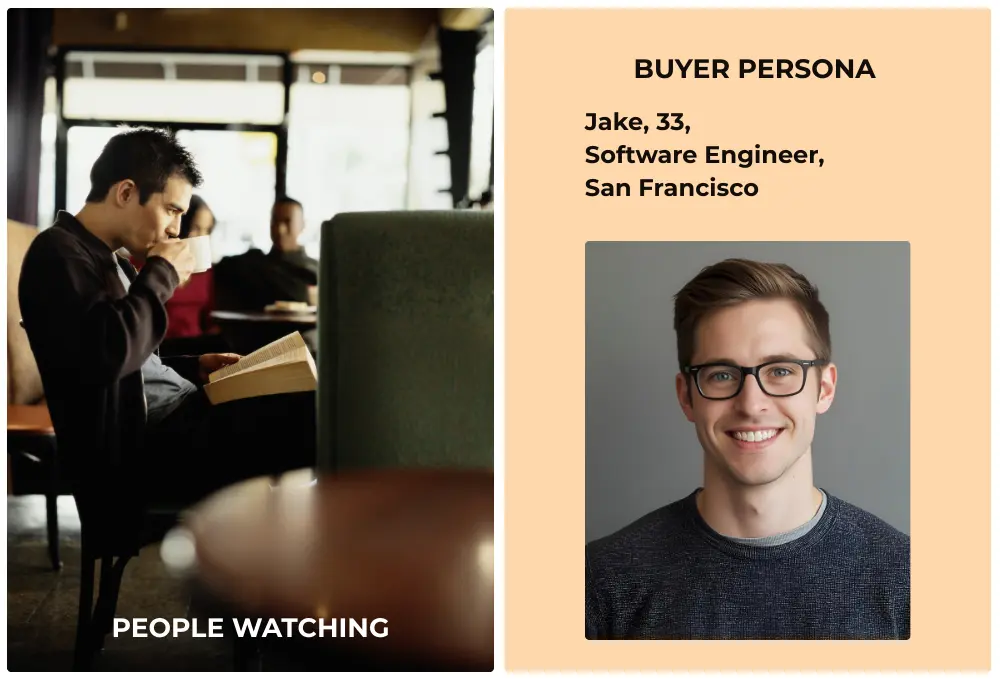
People watching for marketers is an exercise that will do more than a buyer persona can ever do. They sure are important, but they are static.
For example, a persona might read, ‘Jake, 33, software engineer, San Francisco.’ But Jake at 8 a.m. on a Monday stuck on the Bay Bridge is different from Jake at 7 p.m. on Friday unwinding with his friends in a Mission District bar.
That’s the difference: people-watching is dynamic, in the moment, and situational.
By that, I mean:
- It is about reading micro-signals like pause, scroll, hover, slang, etc.
- It means attending to context (timing, region, norms).
- It is about interpreting meaning by borrowing from outside disciplines.
- It is about running micro-experiments to see ripple effects in real time.
As Daniel Kahneman describes in Thinking, Fast and Slow, much of our decision-making happens through fast, automatic judgments (what he calls “System 1” thinking), which makes micro-signals like a pause, scroll, or hover especially potent cues for marketers.
As a marketer, think ‘what’s this situation, thing, or person signalling right now at this moment, along with what are the buyer’s pain points?’
The Power of Observation
Great marketing content is an amalgamation of observation, expertise, and strategy.
Anyone with a lot of knowledge and application can become an expert at creating content, but strategy comes as a result of a deeper understanding that goes beyond the principles of marketing and content, which is rooted in observation.
Observation is an art—it is what gives marketing its wings—think segmentation, targeting, or even positioning—all come from observation.
That said, great marketing comes from myriad angles, which I call the lenses to observe the world around and its connection to the world of content and marketing.
This article discusses the 12 lenses of marketing to help you gain a better understanding of content and marketing.
The 12 Lenses of Observation in Marketing
To ground observation in practice, I’ve framed it through 12 distinct lenses. Let’s discuss them in detail.
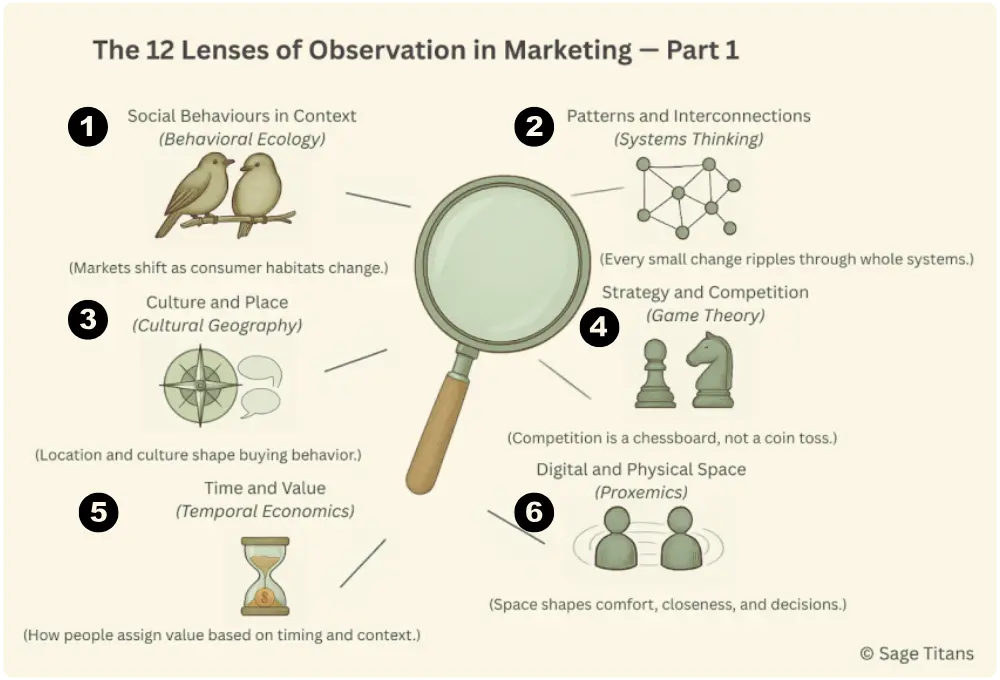
1. The Lens of Social Behaviors in Context (Behavioral Ecology)
It focuses on how living beings adapt to their surroundings and environment for survival.
A shift in the ecosystem means a change in the market. ‘Habitats’ shift, i.e., consumer trends change, and tech changes happen. Therefore, the brands need to adapt and evolve.
Take, for example, Netflix, a brand that primarily dealt in DVD rentals but has now evolved to streaming original content. It is amazing how far Netflix has come from the days of Blockbuster vs. Netflix to Netflix as one of the leading platforms for subscription-based streaming services.
Adobe’s pivot from boxed software to Creative Cloud subscriptions reset the “habitat” for creative tools.
Takeaway: Understand consumer behavior shifts and cultural trends, aka the environmental signals, to adapt and survive.
2. The Lens of Patterns and Interconnections (Systems Thinking)
It’s about viewing problems as part of interconnected systems.
A seemingly small change in the UX can have a major impact on the whole ecosystem.
Think Apple in this case. Apple is known for its seamless integration between its devices, something it is known for, and is its core.
Similarly, Amazon Prime bundling (shipping + video + music) shows how one benefit boosts usage across the system.
Takeaway: Understand dependencies and map them before changing any part of your funnel.
3. The Lens of Strategy and Competition (Game Theory)
It is about the mathematical modeling of strategy between competitors.
It involves things such as pricing wars, launch timings, and market entry. In the world of competition, brands like Coca-Cola and Pepsi are the initial brands that we think of. Cola wars, as we say, have evolved into fierce competition, with shared territories to gain dominance in the market.
Canva can be a great example of how Canva is a great example of how looking at untapped opportunities can do wonders. Instead of being just another Adobe alternative, it broke Adobe’s monopoly by serving the non-designer audience. Adobe built powerful tools for pros, but Canva flipped the narrative by offering drag-and-drop simplicity, templates, and a free tier for everyday users. In doing so, it didn’t compete head-to-head; it changed the game to one where Adobe’s advantages mattered less.
Takeaway: Look at the competitor’s strategies like a game of chess, and not a coin toss.
4. The Lens of Culture and Place (Cultural Geography)
It is about how location shapes culture and behavior. As a marketer, this is one of the most important lenses.
A strategy can make or break the game if cultural geography is involved. Think local memes, regional buying habits, and geo-specific campaigns as examples of this.
A tweet by a user in 2024 suggested Swiggy introduce a scanner feature so people could shop from its app just as Indians traditionally do. In response, Swiggy tweeted about the feature update—acknowledging both the person’s tweet and traditional buying methods that most Indian households employ.
Sometimes, it is not just the marketers at a company. Anyone can be a marketer-observer if they truly get deeper and connect the lenses of observation with it.
Another example is chains like KFC or McDonald’s. To cater to India’s vegetarian population, they’ve localized their menus and made them vegetarian. Their campaigns differ in different countries, too.
Starbucks Japan leans into seasonal sakura drinks and store visuals tuned to local aesthetics.
Takeaway: Map your audience’s cultural terrain before messaging.
5. The Lens of Time and Value (Temporal Economics)
This term is a combination of the two terms, namely temporal, which is about time, and economics, which is about the study of value, scarcity, and decision-making.
So, Temporal Economics is all about how people assign value and make decisions based on time.
Sometimes, it is not money that drives everything; rather, I believe it is time that makes marketing effective.
Think of Q-commerce platforms that promise delivery within the stipulated time, where ‘time’ is the selling point.
It is about the right time and the right place. A gym offer in late December might not be as successful because of the holiday season than the same offer in January, even though they are days apart.
And it is not just about campaigns—a landing page with just two steps is better for Conversion Rate Optimization than one that has 7 steps involved because the ‘extra time’ feels more expensive than money. That’s why people bail out when they find forms with multiple steps instead of concrete, required steps.
Sweets during Diwali and chocolates on Valentine’s Day feel worth more than the same items a month later. This means certain times are ‘ritual windows,’ where people assign higher value.
Consider the ‘Not Just a Cadbury Ad.’ It used hyperlocal ads during the Diwali season, connecting local shops using geo-local targeting for maximum impact.
Now, let’s discuss a case of failure, too. Amul, known for its iconic Amul Girl, has a special place in every Indian’s heart. Its timely and witty campaigns are loved by all, but not every time.
The Coldplay concert moment that caught millions of eyeballs around the globe, with memes spreading across the internet like wildfire, and brands, people, and everyone jumping in like crazy.
Amul took advantage of this but failed. It’s a classic example of when timeliness crosses into opportunism just for the sake of content or campaign, leading to disaster.
Takeaway: Money is not the only currency; time is. And in many cases, customers treat time as more expensive than money.
6. The Lens of Digital & Physical Space (Proxemics)
It is about how humans manage space and distance. Too close might be too invasive; too far away might feel too cold.
How we perceive space is about how things often work in marketing. For example, in design, whitespace gives space to breathe for the design.
It is the reason why certain things are placed in ways in a store that grab your attention. That body wash that you initially didn’t want to buy made its way into your shopping bag just because it was placed like that.
Think of Apple—have you ever noticed the vibe its stores give that encourages exploration without crowding? The in-store design matters, too, just like website spacing, ad layouts, whitespace, etc.
A form that’s too much in someone’s face makes them step away because they become uncomfortable (after all, proxemics is all about how digital “space” (UX layout, content spacing) changes user comfort levels).
Takeaway: Space isn’t cosmetic; it resets how close customers feel and how they behave.
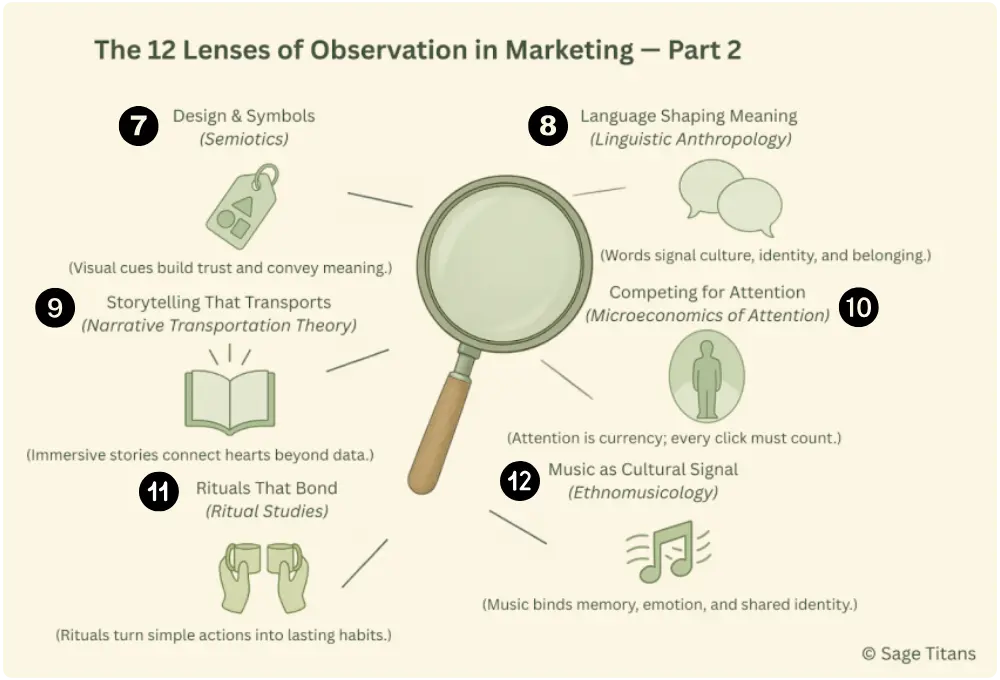
7. The Lens of Design and Symbols (Design Semiotics)
It is how visuals convey meaning to something without words. It is about the subtle cues that influence the trust and action of the people.
It includes all the colors, symbols, shapes, fonts, etc., that communicate without using words. Think about the classic ‘purple means luxury’ example, which is too cliché, I know, but it is what it is!
But let’s go beyond these overused ones.
Think brands like Kama Ayurveda or Forest Essentials. They embody certain aesthetics that describe them as Ayurveda-inspired with modern luxury, and it just doesn’t show in their packaging or branding; it shows in their stores, their employees’ attire, the lighting of the showroom, etc.
So, it is much beyond just the shapes, colors, or fonts, since it is about the subtle visual cues to communicate without using words, which ultimately builds trust beyond design.
But sometimes, these tiny symbols can backfire, too. The classic example of the Patanjali Dant Kanti tooth powder fits here well.
The vegetarian symbol has long been the symbol of trust for the Indian consumer—something deeply and subconsciously rooted in us to blindly trust the brand if the brand uses the green square and circle symbol. But this case had everyone questioning their trust.
A brand known for Ayurveda and marketing products as vegetarian-first, and using a non-vegetarian product! Yes, it did, and the Delhi High Court in 2023 issued a legal notice to the brand for using cuttlefish bone (under the name of samudraphen).
This shows how certain symbols can backfire if they don’t align with the consumers’ perception.
Takeaway: The understanding of the lens of semiotics is powerful because it helps in understanding the pre-verbal cues. Get it right, or risk being amplified.
8. The Lens of Storytelling that Transports (Narrative Transportation Theory)
It is about getting so absorbed in the story that they believe they are a part of it.
It is about lowering their skepticism and accepting ideas within it.
The core idea is that when you are fully immersed in a story, you’re less likely to argue with it.
Think how movies do it. You don’t nitpick every detail; you go with the flow. The same is true for brand stories. If the character is relatable, you feel what they feel.
It is the reason why stories win more than data-driven content because data convinces the brain, and stories not only convince but also connect to the heart.
Nike does a wonderful job at it—‘You Can’t Stop Us’ or ‘Just Do It.’ Think Apple’s ‘Think Different’ campaign.
In investor decks or pitches, it is the story that they use, since stories connect and make others better understand everything more than anything can ever do.
It is the reason why you see brands come up with innovative and creative pitches to tell their stories in shows like Shark Tank. It is the reason why some emails read like stories, not instructions that connect. It is the reason why plot wins over data in B2B sales.
Takeaway: The more your brand feels like a story people can live inside, the less it feels like marketing.
9. The Lens of Competing for Attention (Microeconomics of Attention)
It is about treating attention as a scarce, limited, and valuable resource.
We are in the time of getting things done in the least amount of time. Think about the lowering attention spans because of the scroll-first Instagram Reels.
And here’s something that you might find interesting: people are not just stingy with time; they just want to subconsciously weigh the ‘attention cost’ vs. the ‘attention ROI’ before clicking anything.
It is the reason why every marketing expert says that the headlines, notifications, and thumbnails should grab attention and feel ‘worth the cost.’
Think brands like Blinkit. It uses regional product naming for certain products, which helps lower cognitive cost by aligning with the local language of the users.
I came to know about it via a test I did—I had to buy fresh basil leaves for a recipe and the name was fresh basil leaves along with its Punjabi name (Tulasi de Patte), and suddenly my observation lens turned on and I thought if it is just here or maybe the name of the leaves get changed as the location, and I changed my location to Bangalore, and I found the name of the leaves was ‘Tulasi Yelegalu.’
Since the majority of the Indian population is vegetarian, Zomato and Swiggy now use a toggle switch alongside the search bar, which makes it easier to choose the restaurants/dishes from preselected choices.
Zomato has ‘Recommended for you,’ while Swiggy has ‘Reorder’ and ‘Food in 10 minutes’ at the top, along with the ‘99 Store.’ Instead of dumping a list of 2000 restaurants, these things help them reduce the attention cost of filtering, which helps the users place orders quickly.
On the bottom of the app in Blinkit, there’s an option for ‘Order Again,’ and just below their ‘Featured’ section, there’s a ‘Frequently Bought’ section that includes not only the items you’ve frequently bought but also similar items, but categorized like in categories like Vegetables & Fruits, Home Essentials, etc., along with the category of ‘Favorites,’ which is number one on the list of ‘Frequently Bought.’
Again, for the same reason, it reduces the attention cost of filtering, which results in quicker orders.
Swiggy Instamart does something similar: ‘Hey {Name}, Your Quick Picks’ on its home page and ‘Reorder’ at the bottom.
Takeaway: In marketing, you’re not just competing for wallets—you’re competing for attention budgets.
10. The Lens of Shared Practices and Rituals (Ritual Studies)
Here, when I talk about ‘Ritual Studies,’ I talk about the study of repeated symbolic actions of people without questioning them.
Think about daily app habits or seasonal product rituals that brands have. Rituals can be personal or group-based.
For example, your Spotify playlist before work is your personal playlist because it is solely yours. That Friday night pizza with friends is a group-based one.
Gifting sweets during Diwali is a common tradition in India, a cultural one, but it is a ritual, too.
People do certain actions because of the comfort and predictability they offer. For example, lighting Diyas during Diwali is not just about light but about the traditional values it holds.
Brands can tap into existing rituals, like morning coffee or Friday drinks. Think about Amul, but this time in a positive light. Bread and butter is a classic morning ritual in many households, and the brand has perfectly cemented itself into that space.
Apple’s packaging is so carefully designed that its unboxing feels more of a sacred moment, an ‘unboxing ritual.’ It is about understanding how people don’t just consume products but how they perform them.
Products are bought once, but rituals keep repeating forever. And it is not just about rituals; it is also about associations that people make.
Like cake is often associated with birthdays or anniversaries, coffee or tea is often associated with morning, and energy drinks with energy. This is how rituals build on associations, where associations are seeds and rituals grow out of them.
Big brands are doing great in it: tea can be associated with energy or social gathering, along with concepts like ‘elite,’ as in Taj Mahal, or ‘fresh,’ as in Taaza by Brook Bond.
Spotify Wrapped is more than an annual ritual now, which tells us about building small, repeatable moments that the audience can participate in.
In the late ‘80s and the ‘90s, T-Series popularized Jhankar Beats, which was not just a sound but a ritual for truck drivers. It was nothing about elite music culture, but it was addressing the ritual need: drivers on long, exhausting routes needed that bass-heavy music to stay awake, which T-Series captured beautifully, and they popularized their Jhankar Beats, low-cost versions of the popular Bollywood songs with portable drum-machine effects.
Takeaway: If your brand can tap into those rituals, you’ve hacked loyalty.
11. The Lens of Language Shaping Meaning (Linguistic Anthropology)
Here, it means how people use language to create identity, belonging, and meaning. It is not just what words people use, but why they use them and what those words signal about who they are.
Language is identity. It is why people use slang, code-switching, or dialects to show that ‘yes, I belong to this group.’ It is why young people say ‘lit’ or ‘vibe check’ that signals group belonging or membership, not just the meaning.
The way something is phrased can make certain people belong or alienate them completely. That is why using heavy corporate jargon-filled ads feels alien to a Gen Z audience that expects a casual tone.
Words change their meaning quickly, too. Brands that fail to adapt sound outdated. For example, ‘sick’ once meant being ill; now it means something that’s amazing.
It also means how brands can use wordplay to create wonderful campaigns or products. For example, Amul uses witty and timely puns, and they work well because they’re deeply rooted in Indian culture, which is a mix of English and Hindi wordplay played well.
Coca-Cola’s ‘Share a Coke’ campaign went beyond names like Bro, Bae, Son, etc., and it even used regional languages to personalize the bottles along with the relationships. What it tapped into was that certain names and relations carry identity and belonging.
Recently, when I was going to a store in Mohali, I saw a big billboard of Blinkit with its Rakhi campaign, in which it used its copy in English, but the language was Punjabi, signaling, ‘we speak like you.’
Takeaway: Every word you choose is more than communication. It is a signal of culture, identity, and belonging.
12. The Lens of Music as Cultural Signal (Ethnomusicology)
Here, it is about how music interacts with culture, people, identity, or daily life. It is how different groups use music not just for entertainment, but for belonging, rituals, emotions, and identity.
Music, I believe, is like a social glue. It often brings people together as a group. Think national anthems, wedding songs, or college chants, for example.
What you listen to often signals who you are. Listening to K-pop isn’t just about music; it is about global fandom, too.
Ethnomusicology reminds us that music is not just sound; it is a cultural shortcut, a signal for memory, mood, and belonging.
When brands harness the right sound at the right moment, they are not just playing a jingle; they’re joining a culture.
Think of Saregama, which uses Lo-fi music covers of the old Bollywood songs these days to cater to the growing need of the Lo-fi trend. It also uses aesthetic images or videos with music lyrics as overlays along with popular songs on Instagram.
T-Series does something similar—it uses videos as memes or relatable copies along with trending music in its videos.
It is what made the famous Rajasthan Tourism ad with ‘Maati Baandhe Painjanee’ successful because it used cultural authenticity with Rajasthani lyrics, sensory and emotional resonance, and narrative storytelling through music rather than just being a jingle or generic tune that truly reflects Rajasthani heritage.
Intel’s five-note audio logo proves how a sonic cue can become instant brand recognition.
Takeaway: Brands that get music right are not just making ads sound better; they’re tapping into identity and culture.
How to Apply the 12 Lenses
Well, all the above-mentioned terms might sound too formal or academic, but when you start understanding their connection with marketing, it’ll be a lot of fun, as it is for me. Here’s how you can do it, too:
- Keep a log of field notes: Screenshots, overheard phrases, store layouts, UI quirks, and everything you might find.
- Translate to marketing: It is not just about copying the field literally. Instead, ask yourself, ‘What’s the marketing equivalent of this?’
- Micro-test: Pick a lens and propose a tiny change based on that (of course, observation and research have to be there behind that), define the KPIs for success, and see how it works.
Observation is not just theory but in practice.
Why People-Watching Beats Trend-Chasing
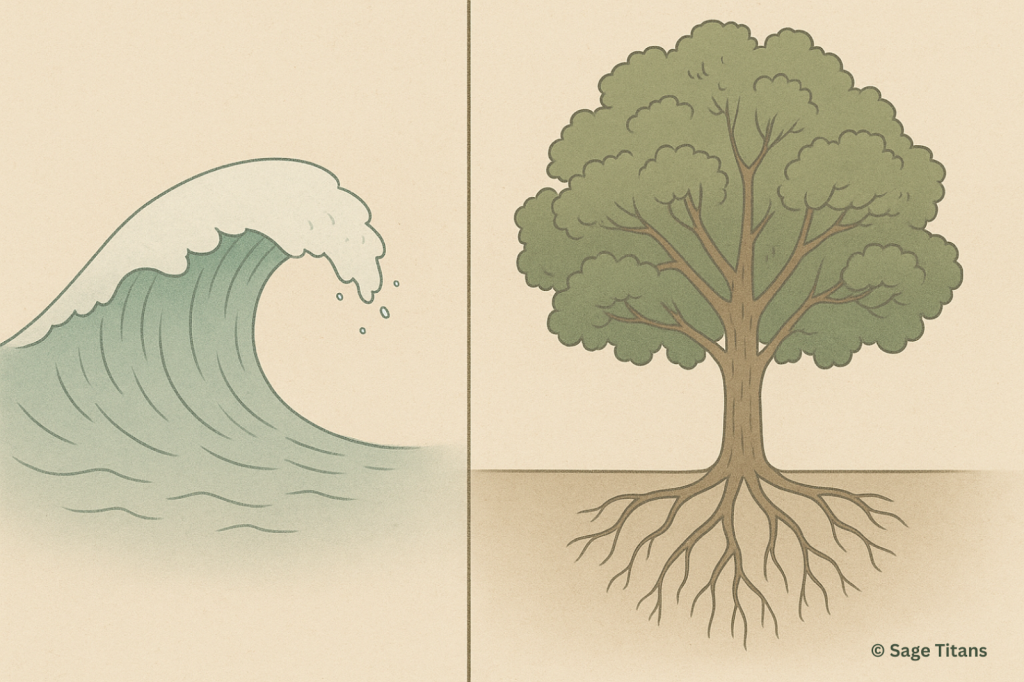
Trends come and go; they are shallow and reactive. Observation is always structural and compounding.
Think of the lenses we discussed—all of them have one thing in common: observation.
Rituals, semiotics, or cultural geography last for years and decades and not weeks. Anyone can copy your tactic, but few can copy your lens.
The Marketer as Observer
That rainy book club meeting at the café was a moment I will always cherish. It was that spark that made it all happen! Observation tells stories more powerful than any pitch can ever do.
Here’s my nudge to you: next time you’re in a café, a metro, or even strolling through an app, just pause and watch. Ask yourself, what are people or things signaling right now, without saying a word? That’s where creative ideas or inspiration might make their way.
And I’d love to hear from you—which of these lenses resonated with you the most? Or better yet, share an observation you’ve made recently that could inspire marketing magic. Drop it in the comments; I’m always curious to learn how others see the world.
Because in the end, the best brand content feels less like selling and more like people-watching. And sometimes, it all starts with a rainy evening, a book club, and a little noticing.