

Key Takeaways
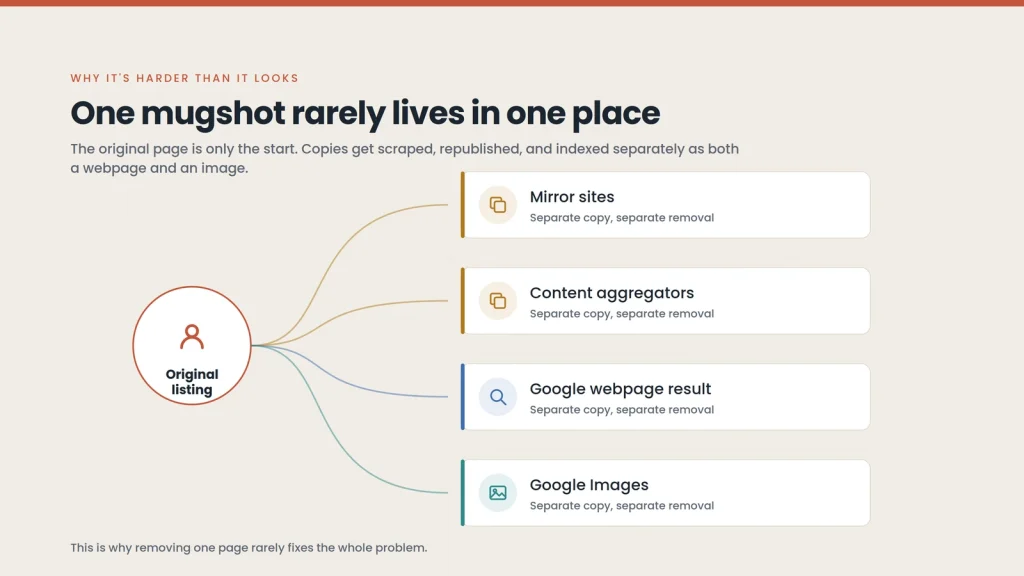
- One mugshot rarely lives in one place. Copies get scraped, republished, and indexed as both a webpage and an image, so removing a single page rarely fixes the whole problem.
- Website removal, Google de-indexing, and search visibility are three separate layers, and clearing one doesn't automatically clear the others.
- Expungement changes your legal record, not the copies already published online. Sealed records can support a removal request but aren't a removal themselves.
- Removal targets specific content while reputation management reshapes the whole picture, so knowing which one your situation needs saves wasted effort.
- Removal isn't a one-time fix. New copies and search results can resurface months later, so ongoing monitoring matters as much as the initial action.
It’s a disconcerting feeling to have your own mugshot sitting in Google’s search results. Maybe the charges were dismissed. Maybe you finished sealing records years ago. It could be a mistake that has nothing to do with who you are today. It is the same inclination, whatever the circumstances: repair this and fix it fast.
That hurry is exactly why individuals make costly, inefficient decisions. Mugshot removal seems like it should be easy; find the page, request removal, move on. In actuality, it involves publishers, search engines, indexing systems, and legal documents that don’t always communicate with each other. The first step towards a smarter, more realistic plan is to understand what people get wrong.
Why Mugshot Removal Is More Complicated Than Most People Expect
A single mugshot rarely lives in just one place. It may be duplicated across multiple mugshot websites, scraped by content aggregators, and indexed separately by Google as both a webpage and an image result. On top of that, public records removal and content removal are not the same process. One deals with the legal record itself, the other with how that information appears online. Then throw in the delays inherent in search indexing, and it’s simple to see how one repair rarely fixes the full problem.
Mugshot Removal Reality Check: What Can and Cannot Be Done
Before diving into strategy, it helps to separate realistic outcomes from wishful thinking.
Possible:
- Requesting removal from cooperative publishers
- Updating outdated or inaccurate search results
- Reducing visibility of unwanted listings
- Strengthening overall online reputation over time
Not always possible:
- Controlling every third-party website that republishes content
- Guaranteeing permanent removal
- Erasing every reference tied to public records
- Compelling Google to eliminate information that doesn’t fit its removal standards
Unrealistic expectations and wasted effort are avoided by keeping these restrictions in mind.
Why People Make Mugshot Removal Mistakes
Most missteps come from the same emotional and practical pressures:
Fear: “I need this fixed before someone sees it.”
Urgency: “I need the fastest possible solution.”
Confusion: “I don’t know who actually controls this information.”
Lack of technical understanding: “I assumed removing one page would remove everything.”
It is simpler to slow down and make better selections when you are aware of these trends.
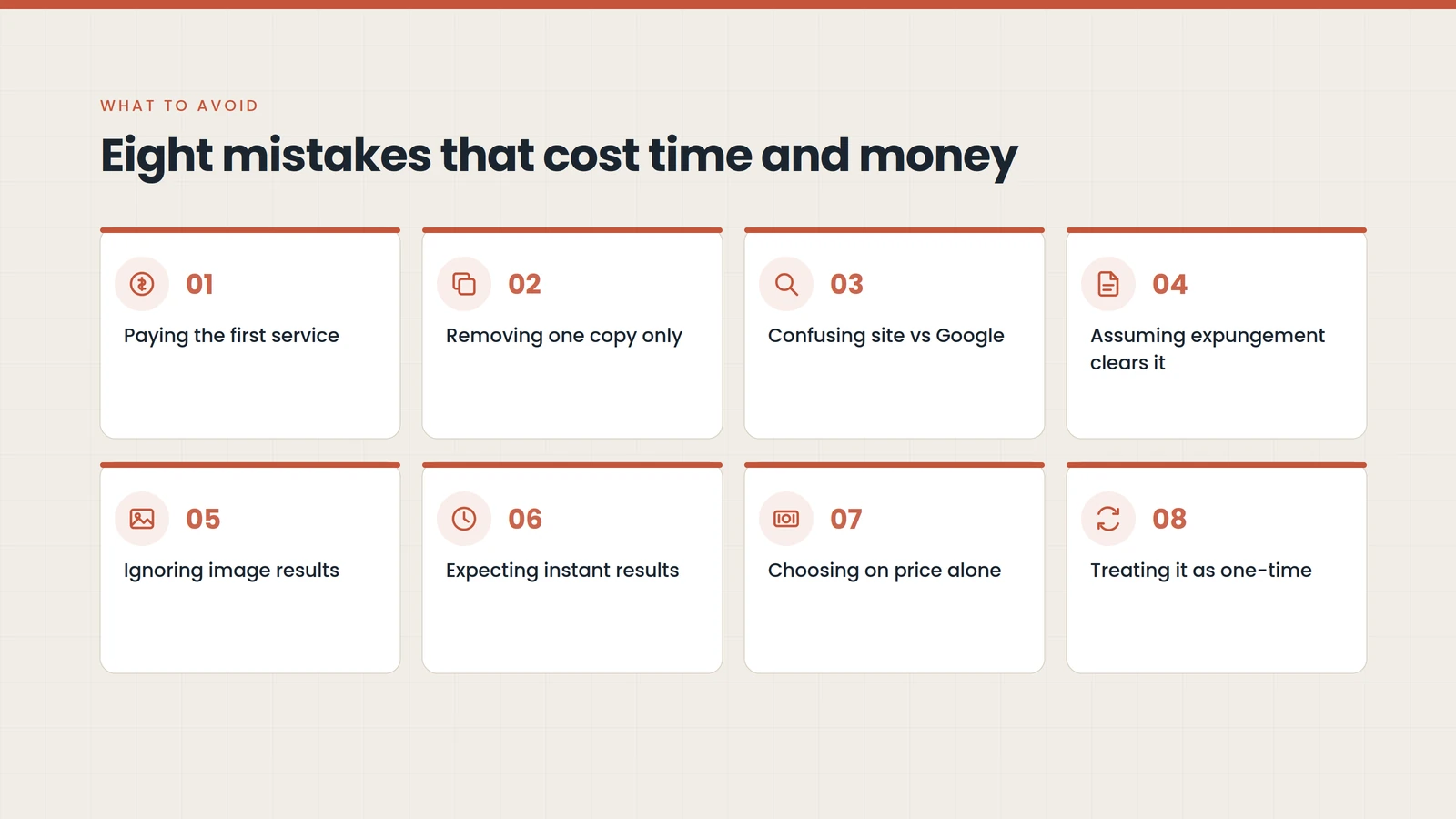
Mistake 1: Paying for the First Website or Service Offering Removal
Often, panic drives people to the first result that offers a quick fix. Before you pay for anything, it’s worth knowing exactly what’s being removed, where it’s being removed from, and how long results usually take. Not all mugshot removal services are the same.
Mistake 2: Removing One Mugshot Listing and Ignoring Other Copies
Content is very rarely in a vacuum. Even when the original page is no longer available, duplicate URLs, republished content, and separate picture listings typically exist. Thorough implies finding all of them, not just the first one you find.
Mistake 3: Confusing Website Removal With Google Mugshot Removal
This is one of the most popular misconceptions. There are three different layers involved: the website that the content is on, the indexing of that page by Google, and how that page shows up in search visibility. Getting a publisher to remove content doesn’t automatically clear cached versions or update or remove mugshot Google results. That can take additional time and separate action.
Mistake 4: Assuming Expungement Automatically Removes Online Content
Expungement records and record sealing change your legal record. They do not automatically delete copies already published online. Many people are surprised to learn that courts and websites operate independently. If your record has been sealed or expunged, documentation can support a removal request, but it isn’t a removal in itself.
Mistake 5: Ignoring Image Search Results
Text-based pages aren’t the only concern. Google Images often stores thumbnails separately from the source page, meaning a mugshot can still surface visually even after the original listing is addressed. A complete strategy accounts for both.
Mistake 6: Expecting Instant Results
Every stage, including request submission, publisher response, search index updates, and broader reputation repair, operates on its own timeline. Updates can take days or weeks. Expecting instant outcomes can turn irritation into premature payments to overnight fix providers.
Mistake 7: Choosing a Service Only Based on Price
Cost matters, but it shouldn’t be the only factor. Before committing, ask: What exactly is included? What process is followed? What outcome is realistic? A cheaper option that doesn’t clearly answer these questions may cost more in wasted time than it saves in dollars.
Mistake 8: Treating Removal as a One-Time Fix
New copies and search results can appear after removal. Protecting your digital presence requires ongoing monitoring.
What to Do Instead: A Smarter Mugshot Removal Strategy
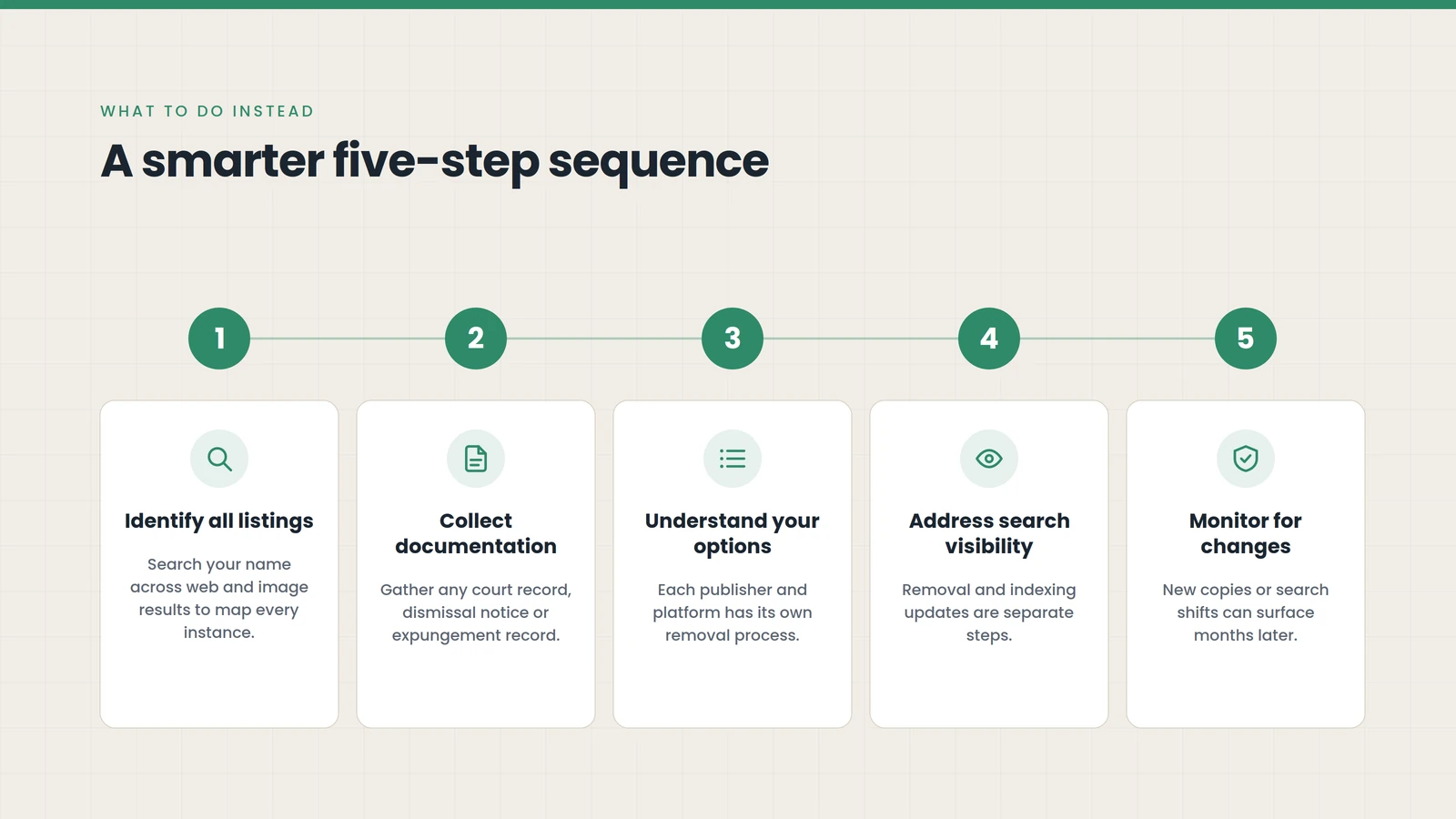
Step 1: Identify all listings. Search your name across the web and image results to map every instance.
Step 2: Collect documentation. If applicable, obtain a court record, notice of dismissal, or expungement record.
Step 3: Understand removal options. Different publishers and platforms have different processes.
Step 4: Address search visibility. Removal and indexing updates are separate steps.
Step 5: Monitor changes. New content or search shifts can happen months later.
Mugshot Removal vs. Reputation Management: Understanding the Difference
Removal targets specific unwanted content. Reputation management takes a broader view, strengthening your overall online reputation so that a single old listing carries less weight in search results. They each do different things, and knowing which one applies to you can save you a lot of unnecessary work.
DIY Mugshot Removal vs. Professional Support
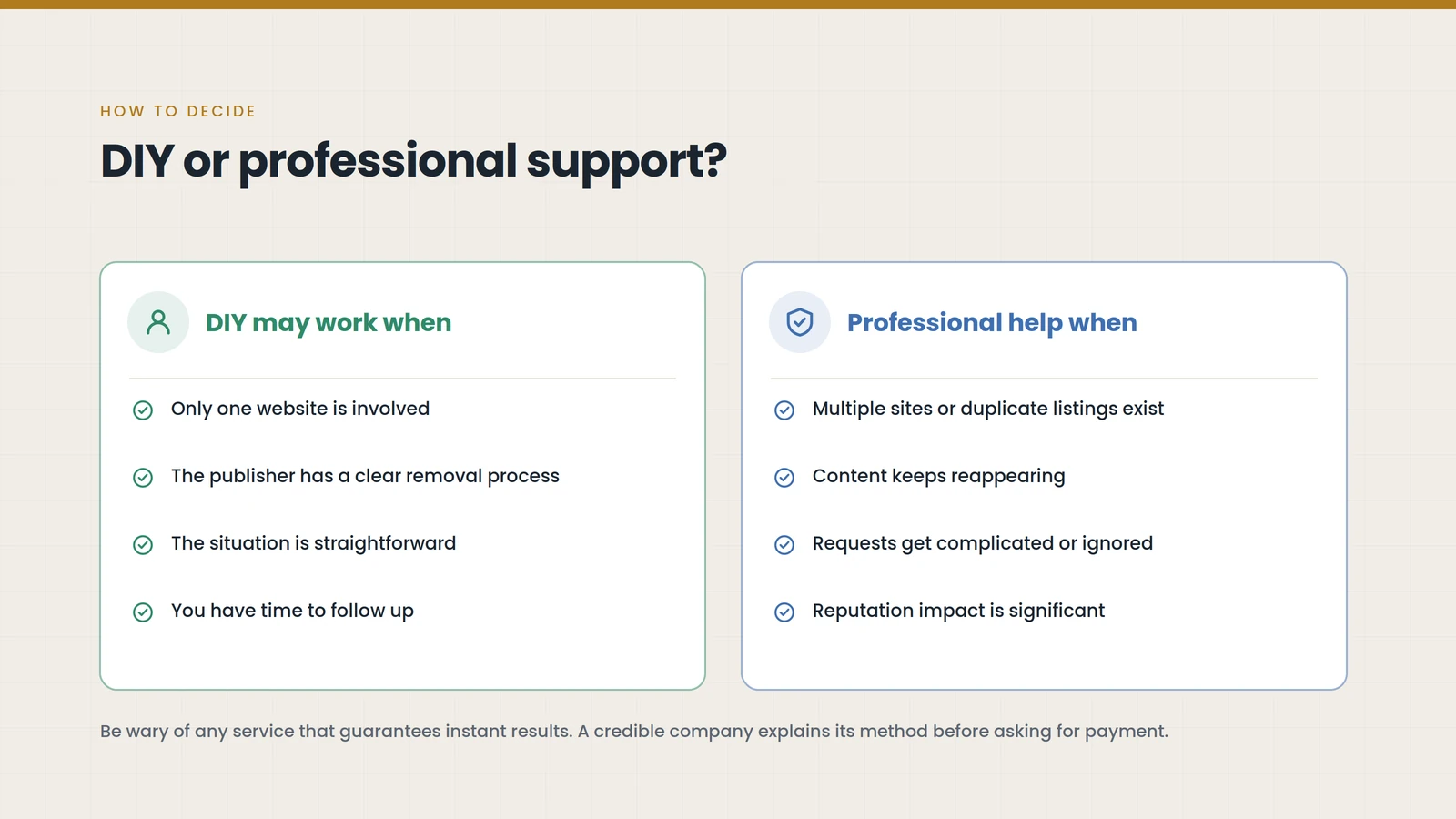
DIY may work when:
- Only one or two websites are involved
- The publisher has a clear removal process
- The situation is straightforward
Professional support may be useful when:
- Multiple websites or duplicate listings exist
- Content keeps reappearing
- Requests become complicated or unresponsive
- The reputation impact is significant
- Time is limited
There is no right response; it depends on the complexity of your individual circumstance. Be wary of mugshot removal companies that offer or guarantee immediate results. These are false promises. A professional company will explain their method to you.
Frequently Asked Questions
Can a mugshot be removed from Google? In some cases, yes, through publisher removal, updated indexing, or search visibility adjustments, though outcomes vary by situation.
Does expungement remove online mugshots? Not automatically. It changes the legal record, not existing online copies.
Should you pay the mugshot websites directly? Evaluate carefully and understand what’s actually included before paying anyone.
How long does mugshot removal take? Timelines vary widely depending on the publisher, search engine indexing, and number of listings involved.
Can reputation management help? Yes, particularly when full removal isn’t guaranteed or when broader visibility is a concern.
Is removal permanent? Not always. Ongoing monitoring helps catch new copies or changes.
Conclusion
Removing mugshots is not a one-time event. It’s a process that involves legal records, publishers, search engines and long-term reputation. If you avoid the usual pitfalls described here, such as paying the first service that comes along, overlooking duplicate listings, confusing website removal with search engine removal, or expecting results overnight, you’ll be in a considerably better position to make informed choices.
When you have several websites involved, persistent search results, or no obvious ways to be removed, a professional reputation audit will help you discover effective next measures.